The Dangerous New Trend in Game Cracking: Why 'Hypervisor Bypass' Is a Massive Risk to Your PC
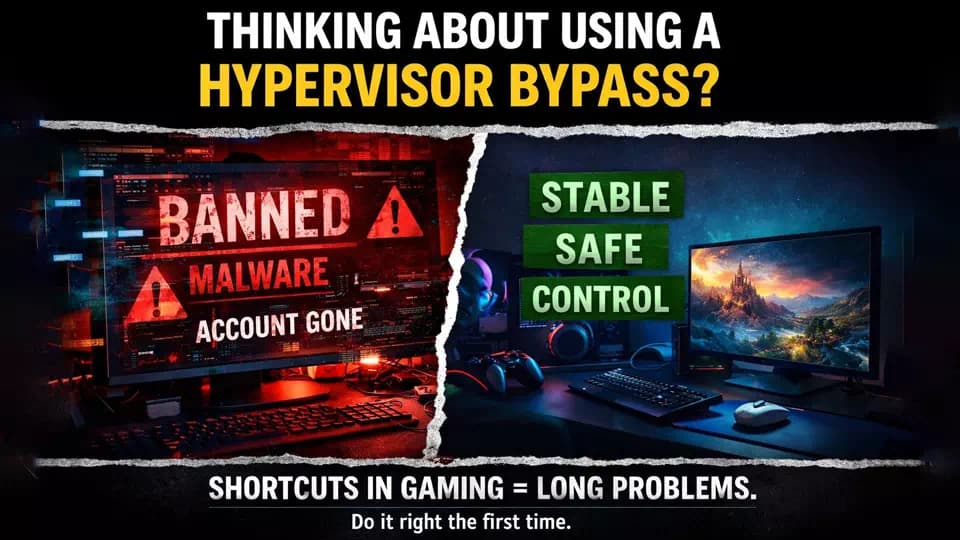
If you are a gamer or a tech enthusiast, you have probably noticed a significant shift over the last year or two: the era of quick, day-one "cracks" for major game releases is practically over. With modern anti-tamper systems like Denuvo and advanced Windows security kernel updates, traditional methods of modifying game code have become nearly impossible.
However, in response to these tight security measures, underground developers have pivoted to an incredibly complex—and dangerous—technology: Hypervisor-Based System Security Bypass.
The purpose of today’s blog is not to explain how cracking works, but to raise awareness about how this new wave of virtualization-level manipulation puts your personal computer, expensive gaming rigs, and private data at absolute risk.
1. What Exactly is a Hypervisor Bypass?
To understand the risk, you need to understand where a Hypervisor sits in your computer.
In a standard system, games and antivirus software run inside the Windows Operating System, which operates at Ring 0 (Kernel Level). A Hypervisor, however, is a sophisticated layer that sits directly between your computer's hardware and the OS. It operates at an ultra-deep level known as Ring -1 (Minus One).
In a Hypervisor Bypass scenario, instead of breaking the game's security code, hackers inject a custom hypervisor that boots before Windows even starts. Windows then runs inside this modified virtual environment. Because the game's anti-cheat or anti-tamper system is trapped inside Windows, it cannot look underneath itself to see that the hardware-level hypervisor is feeding it spoofed memory data.
While it might look like a seamless way to play a game for free, it opens a dangerous backdoor into your system.
2. Why Hypervisor-Level Exploits Are Highly Dangerous for Users
Traditional cracked games usually contained trojans or malicious .exe files that a standard antivirus could easily flag and quarantine. Hypervisor-level bypasses, however, introduce threats of an entirely different magnitude:
A) Unprecedented Privileges (Higher than Administrator)
Because the custom hypervisor operates at Ring -1, it holds more authority over your CPU and hardware than Windows itself. If a hacker binds malware, a backdoor, or a spyware engine into that hypervisor, they grant themselves absolute, unrestricted access to your entire computer.
B) Invisible Malware (Undetectable by Antivirus)
Since your antivirus software runs within Windows (Ring 0), it can only scan things operating within or above its level. It is completely blind to what happens at the Hypervisor level (Ring -1). If a background crypto-miner or data-harvester is running via the hypervisor, your expensive premium antivirus will report that your system is "100% Safe," while your CPU and GPU resources are secretly being drained.
C) Identity Theft and Ransomware Exposure
Most modern PCs store sensitive personal data—saved browser passwords, credit card details, session cookies, and personal files. Giving a third-party, unverified hypervisor access to your hardware means handing over the keys to your digital life. It makes deploying ransomware or silently exfiltrating your personal data incredibly easy for malicious actors.
D) System Instability and Permanent Hardware Strain
Forcing your CPU’s virtualization features (Intel VT-x or AMD-V) to run poorly optimized, underground bypass scripts severely disrupts standard kernel operations. This frequently results in persistent Blue Screen of Death (BSOD) crashes, operating system corruption, and unnecessary thermal strain on your hardware components.
3. Protecting Your Digital Footprint: What Should You Do?
As a trusted platform operating deeply within the software and gaming ecosystem, data security and system integrity are always our top priorities. To ensure your digital safety, we highly recommend following these core practices:
Abandon the Temptation of Modern Cracks: Piracy is no longer just about bypassing a license file; it has evolved into a highly weaponized delivery system for elite-level malware.
Buy from Authorized Vetted Sources: Always acquire your games, digital gift cards, and software utilities through verified, official platforms and authorized resellers. Purchasing genuine retail keys ensures you get instant official updates without compromising your PC.
Enable Hardware-Enforced Security: Ensure that features like Core Isolation and Memory Integrity are turned ON in your Windows Security settings. These features specifically utilize official virtualization to protect your kernel from rogue hypervisor attacks.
Final Thoughts
A premium game or software license might cost a fraction of your budget, but your digital privacy, personal data, and peace of mind are priceless. Compromising your entire PC's root security for temporary entertainment is a gamble where the user always loses.
As your reliable partner in the digital gaming world, we are committed to providing 100% genuine, authorized software licenses, game keys, and gift cards at competitive prices. Protect your investment, stay safe, and always choose official products.
Explore our store today to grab your favorite titles safely and securely. Have you ever encountered system instability after using a cracked tool? Let us know in the comments below, and share this post to keep your fellow gamers informed!